


Incorporate AI from the first call
A strong sales deck workflow doesn’t start when a rep opens a presentation tool. It starts the moment the first discovery call begins.
AI can help sales teams capture critical insights early. Instead of asking reps to reconstruct the conversation later, AI tools can summarize discovery calls, identify action items, surface key objections, and pull out the details that should shape the follow-up deck.
That is when the most useful information is freshest: the buyer’s pain points, goals, objections, priorities, and internal context. But without a repeatable process, those details often get scattered across notes, CRM fields, and memory. The key is finding a tool that brings those inputs together.
The goal isn’t to remove the rep’s judgment. It’s to give them a stronger starting point. Better inputs lead to better prompts, stronger personalization, and a sales deck that feels like a continuation of the conversation. It’s time to say goodbye to generic follow-ups and start turning AI summaries into stronger AI-powered sales decks.
Turn call notes into a structured narrative
A sales deck should do more than recap the discovery call. It should translate what the buyer shared into a clear story.
That story usually follows a simple arc: the problem, why it matters, how your solution helps, and what the next step looks like. AI can help organize messy notes into that structure by identifying the strongest themes, pulling out relevant language, and suggesting a narrative flow.
When reps aren’t worried about note-taking and summaries, they can focus on delivering a stronger call and still follow up with a deal-winning deck.
This is especially useful when multiple stakeholders care about different outcomes. A CFO may focus on ROI and risk. A sales leader may care about speed, adoption, or pipeline impact. A technical stakeholder may need implementation details. AI can create a first pass, but the rep still needs to decide which angle matters most.
That human layer is what turns a personalized deck into a persuasive one.
Take a modular approach to sales deck building
Starting from scratch slows teams down and creates inconsistency. One rep uses outdated messaging. Another pulls in an old case study. A third rebuilds the same slide someone else already made.
A modular deck framework solves that. Break your sales deck workflow into smaller sections that are easier to manage, reuse, and delegate.
Sales teams should create reusable sections for the slides they need most: company overview, problem framing, solution overview, use cases, case studies, implementation, pricing, and next steps. Reps can then assemble the right story without reinventing the structure every time.
AI makes this more powerful by helping recommend which modules fit the deal. Based on industry, buyer role, company size, sales stage, or discovery notes, AI can suggest relevant sections and adapt them to the opportunity.
Beautiful.ai Team Slides enables admins to create reusable slides and store them in the workspace library. Individual users can then access approved slides and add them directly to their decks.
The result is a sales deck that feels tailored while staying aligned with approved messaging and design.
Personalize at scale without losing consistency
Personalization matters, but it often creates brand and messaging drift. Reps want to tailor the deck, so they copy slides, rewrite sections, and tweak formatting. It’s well-intentioned, but the final deck may no longer reflect the company’s best story.
The better approach is to standardize the foundation and personalize the details that matter.
Look for tools that let you lock in brand standards so approved colors, fonts, backgrounds, and logos are always available. In Beautiful.ai, built-in design guardrails help decks stay consistently branded, professional, and polished.
The key is to personalize around deal context, not decoration. The core message, brand, and proof points should stay consistent. The buyer should still see their specific challenges reflected in the story.
AI can help reps adapt language to the buyer’s industry, role, pain points, or desired outcomes. It can turn discovery notes into prospect-specific problem statements, tailor ROI examples, or adjust proof points for a specific segment. Personalization should be an asset, not a liability.
Automate first drafts, not final decks
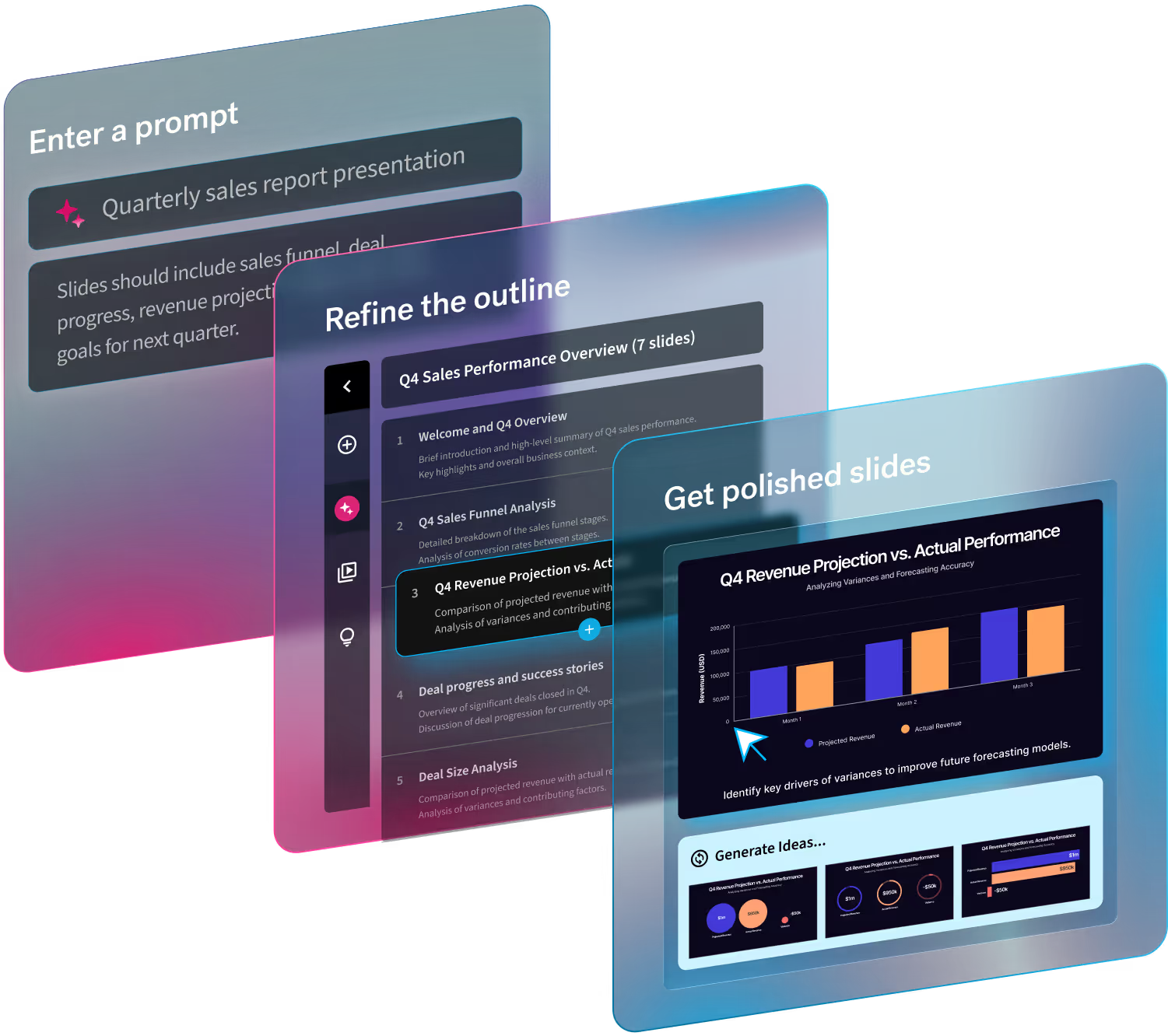
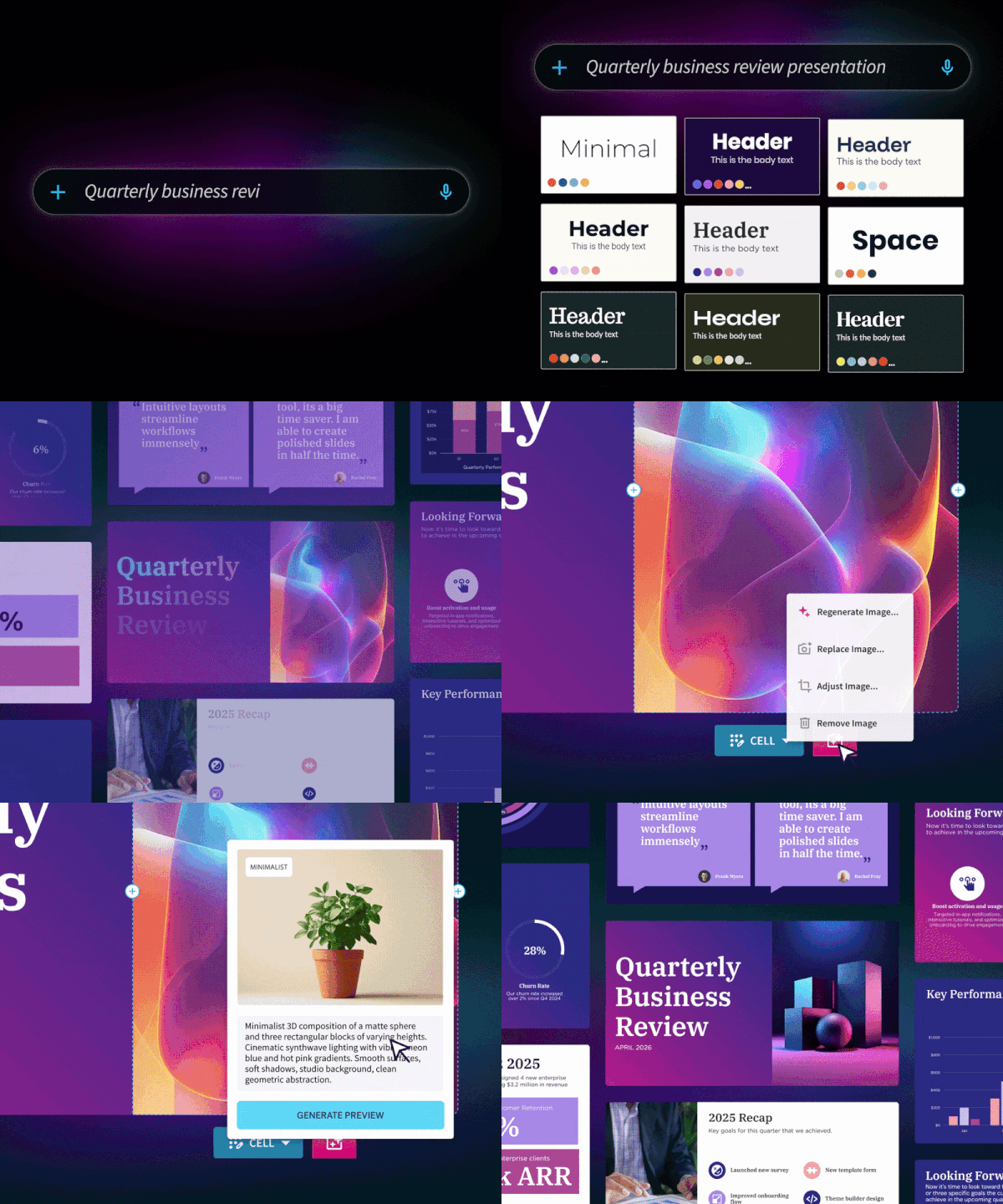
AI is great at getting teams past the blank page. It can kick off outlines, generate content from your input, and, when built into a presentation tool, help manage design so you don’t have to align text one pixel at a time.
But the first draft is not the final deck.
Sales still depends on nuance. A rep knows which objection mattered most, which stakeholder needs reassurance, and which proof point will land best. AI can draft the message, but the rep needs to sharpen it.
That may mean changing the tone, cutting unnecessary slides, adding a better customer story, or reframing the value around the buyer’s real priorities. The best teams use AI to save time on the heavy lifting, then spend that time improving the strategy.
To maximize the ROI of AI tools, users need to avoid treating AI as a replacement. They should double-check the output, protect the buyer context, and refine the story before sending. When you approach AI as an enhancement, not a stand-in, you get the most value.
Create a repeatable workflow for the whole team
When every rep follows a different process, deck quality varies, messaging drifts, and follow-up speed depends on individual habits. Whatever your sales process looks like, the value comes from maintaining consistency and applying it across the team.
A repeatable AI-powered sales deck workflow can be simple to develop:
Record and summarize the call → Extract key insights → Generate the narrative outline → Assemble the deck from approved modules → Customize and refine → Share and track engagement.
A shared workflow gives the team a common operating model. It also makes improvement easier. If certain prompts produce stronger drafts, document them. If one case study works well in enterprise deals, make it easier to reuse. If reps struggle with one section, improve the template.
AI should support the workflow, not replace the process. Human review still matters for accuracy, tone, and deal context.
Reduce turnaround time and increase deal velocity
When a rep sends a relevant, polished deck soon after a strong discovery call, it signals that they listened and know how to move the conversation forward. When follow-up drags, urgency fades and competitors have more room to step in.
Fast follow-up keeps momentum alive.
AI shortens the time between call and deck delivery by compressing the slowest parts of the process: organizing notes, building the structure, selecting content, and formatting slides. Beautiful.ai helps teams collaborate and reduces the need to start from scratch. Because it is web-based, collaboration and real-time communication within a deck are streamlined.
That speed matters most when it’s paired with relevance. A rushed, generic deck won’t help. But a fast deck that reflects the buyer’s priorities can give champions something useful to share internally and help the deal move forward. The advantage isn’t speed alone. It’s speed with substance.
Measure and continuously improve your system
A repeatable workflow should improve over time. Strong teams don’t rely on the same old processes forever. They look for ways to evolve, tighten, and improve.
To improve your sales deck workflow, start by measuring how long it takes reps to create presentations today. Are they spending time on strategy, or losing hours formatting slides and searching for approved content?
Then look at quality and engagement. Are prospects opening the deck? Which slides get the most attention? Where do viewers drop off? Beautiful.ai Viewer Analytics helps teams answer those questions. When you know how slides are performing, you can understand what works and what needs to change. A client won’t always tell you if a deck missed the mark. They may simply move on.
Those insights can help sales teams refine templates, prompts, and messaging. Maybe buyers consistently spend time on ROI slides. Maybe they skip the company overview. Maybe one case study works better for a certain segment.
AI-powered workflows should be treated as a continuous improvement loop. Better inputs create better decks, and better engagement data improves the system.
Identify and eliminate these common mistakes
AI can make sales deck creation faster, but it can also make bad habits easier to repeat. As you develop your workflow, watch for these common issues.
Over-automating personalization
Adding a prospect’s company name to every slide is not the same as reflecting their business problem.
Generic AI outputs
Strong decks need real context, approved messaging, and human editing.
Brand drift
When reps pull from old decks or manually redesign slides, consistency breaks down quickly.
Unmanaged content libraries
Without a single source of truth, reps waste time rebuilding slides or using outdated ones.
Skipping human review
AI can accelerate the process, but reps still need to check accuracy, protect nuance, and make sure the deck feels intentional.
Worried your slides are falling victim to other common mistakes? Read more about what you should be doing instead.
Great sales decks are systemized, not just created
A great sales deck shouldn’t depend on one rep having extra time, strong design instincts, or a personal stash of old slides. It should come from a system.
That system starts right after the first call. It captures what matters, turns insights into a narrative, gives reps approved modules to work from, uses AI to accelerate the first draft, keeps branding consistent, and measures what happens after the deck is shared.
That is the real value of AI in the sales deck workflow. Not fully automated selling. Not generic decks at scale. A faster, more reliable way to create sales materials that are personalized, polished, and grounded in the buyer’s actual needs.
For sales leaders, that means more consistent execution. For reps, it means less time building from scratch. For buyers, it means follow-up materials that are clearer, more relevant, and easier to share.
The teams that win won’t simply make better decks. They’ll build better systems for creating them.
Ready to build a faster sales deck workflow? Explore Beautiful.ai and start your 14-day free trial.

.avif)

.gif)